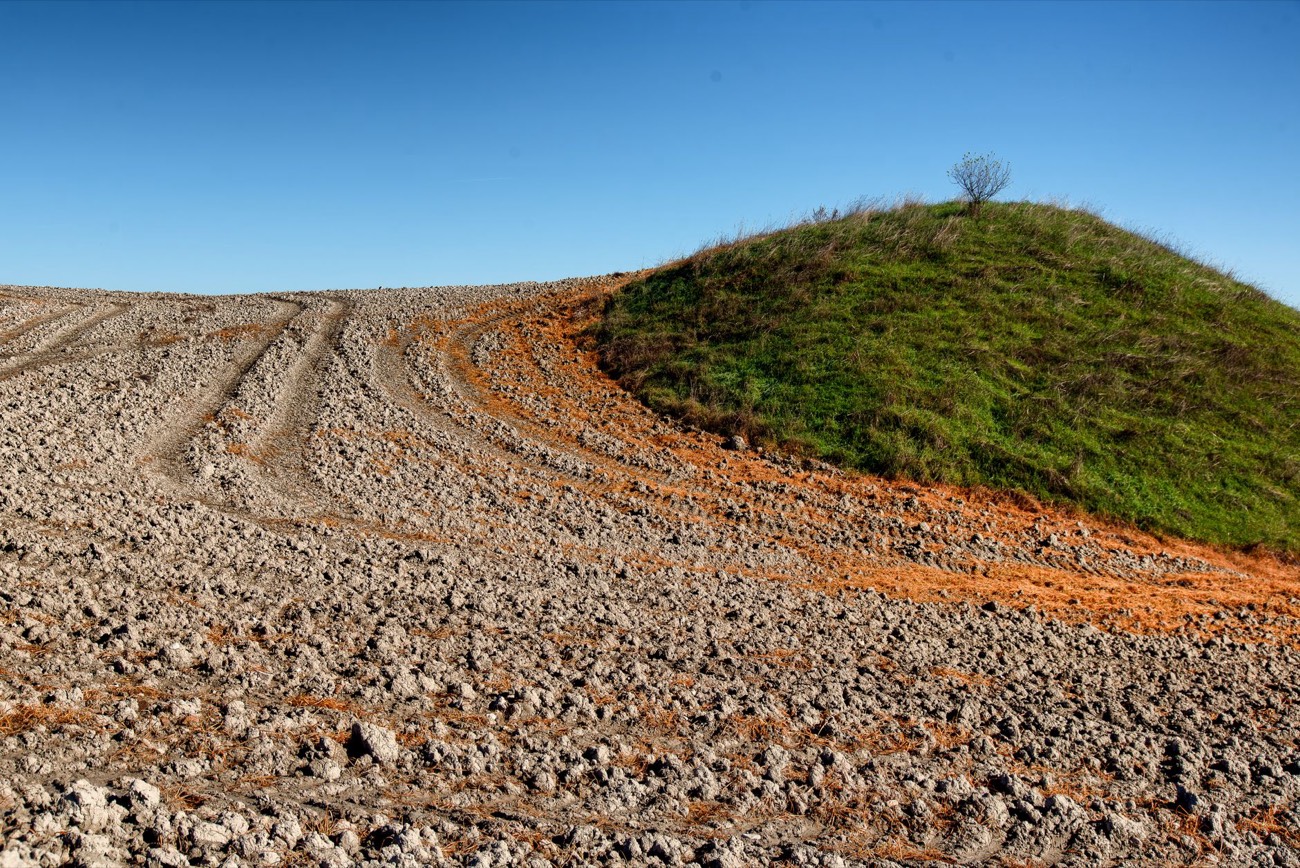
A mound septic system is an engineered drain field built above the ground, used when the natural soil can’t safely treat wastewater. Where a conventional system relies on trenches dug into good soil, a mound raises the treatment area into a constructed pile of sand and gravel. Effluent from the tank is pumped up into that mound, which filters and treats it before it reaches the native ground. You need one when a percolation test and soil evaluation show the site is unsuitable — usually a high water table, shallow bedrock or an impervious layer, or soil that drains too slowly or too quickly. Mounds cost more to build and need closer maintenance because of the pump, but they make otherwise unbuildable lots usable. Here’s how they work and what owning one involves.
Why the ground sometimes can’t do the job
A conventional septic system depends on soil to finish the treatment. After the tank separates solids, the liquid effluent flows into the drain field and percolates down through the soil, where microbes and filtration remove pathogens before the water reaches groundwater. That process needs a certain depth of the right kind of soil.
Some sites don’t have it. The problem shows up in a few forms:
- High water table — if groundwater sits close to the surface, effluent can’t percolate down through enough soil before hitting the water table, risking contamination.
- Shallow bedrock or impervious layer — if rock or dense clay is near the surface, there isn’t enough treatment depth.
- Soil that drains too slowly — heavy clay holds water and the field stays saturated (ponding).
- Soil that drains too fast — very sandy or gravelly soil lets effluent race through before it’s treated.
When a perc test reveals any of these, code won’t allow a conventional drain field. A mound is one engineered answer.
How a mound system works
A mound system rebuilds the treatment layer that nature didn’t provide:
- Wastewater flows from the house to the septic tank, where solids settle and separate as usual — see how a septic system works.
- Instead of flowing by gravity to a buried field, effluent collects in a pump chamber.
- A pump lifts the effluent up into the mound — a constructed layer of specified sand and gravel built on top of the original ground.
- Effluent is distributed through pressure piping across the mound, then trickles down through the sand, which provides the filtration and treatment the native soil couldn’t.
- The treated water finally enters the original soil beneath the mound at a rate it can handle.
The pump is the key difference from a gravity system, and it’s why maintenance expectations change.
Mound vs. conventional at a glance
| Feature | Conventional system | Mound system |
|---|---|---|
| Where treatment happens | Buried trenches in native soil | Constructed sand/gravel mound above ground |
| Requires a pump | Usually no (gravity) | Yes |
| Best soil conditions | Good depth, moderate drainage | Poor: high water table, shallow rock, bad drainage |
| Typical cost | $3,000–$8,000 | $10,000–$20,000 (up to ~$30,000 complex) |
| Inspection frequency (EPA) | Every ~3 years | Annual (has a pump) |
| Visibility | Hidden underground | A visible raised mound on the lot |
Cost ranges are from US cost aggregators (Angi/HomeAdvisor), presented as ranges because regional factors dominate. Inspection frequency is EPA guidance: pump-equipped systems should be inspected annually. Soil-suitability reasoning follows Penn State Extension’s description of how drain fields rely on soil.
What owning a mound system is like
Two realities set mound systems apart from conventional ones.
It’s visible. A mound is a raised area on your property — often a low, grassed hill. You can’t hide it, and you have to landscape and protect it accordingly. Plant only shallow-rooted grass over it, keep traffic and structures off it, and don’t let trees send roots into it. The rules mirror any drain field: see what to plant over a drain field.
It has a pump. Because effluent is pumped uphill, the system includes a pump, floats, and usually a high-level alarm. Those are wear items. The EPA recommends annual inspection for systems with pumps — more frequent than the every-three-years guidance for gravity systems. If the pump fails or a float sticks, effluent can’t reach the mound, and you’ll get an alarm or a backup. Budget for that upkeep.
Cost: more than conventional, less than nothing
Mound and other engineered systems typically run $10,000–$20,000, and complex sites can reach around $30,000 — well above a conventional system’s $3,000–$8,000. The extra cost buys imported sand, a pump chamber and pump, pressure distribution, and more engineering and labor.
That premium can still be worth it: on a lot that fails a perc test, a mound may be the difference between a buildable property and an unusable one. The alternative isn’t a cheaper conventional system — it’s no system at all, or a different engineered option. Because a mound is more expensive to build and its failure points (pump, mound) are costly to fix, protecting it with good maintenance pays off even more than usual. For the priciest failure of any system, see leach field replacement cost.
How to keep a mound working
Because a mound is expensive to build and repair, protecting it pays off even more than with a conventional system. A few habits matter most:
- Protect the mound surface. No driving, parking, or building on it — compaction crushes the distribution piping and blocks the evapotranspiration the mound relies on. Keep it planted with shallow-rooted grass only.
- Watch your water use. A mound has a finite pump-and-dose capacity. Overloading it with water — long guest stays, a leaky toilet, all your laundry in one day — can push effluent through before it’s treated. The EPA’s efficient-water-use guidance matters even more here.
- Service the pump. Have the pump, floats, and alarm checked annually. If the high-level alarm sounds, treat it as urgent: effluent isn’t reaching the mound, and a backup or surfacing can follow.
- Pump the tank on schedule. The tank still separates solids before the pump chamber. If solids escape a neglected tank, they can clog the pump and the pressure piping — an expensive failure unique to pumped systems.
Signs a mound system is struggling
Know the warning signs so you catch problems early:
- Alarm sounding — the high-level float has tripped; the pump may have failed or a float may be stuck.
- Soggy ground or ponding on or around the mound — effluent isn’t being absorbed, a sign of overload or a failing mound.
- Odors, slow drains, or backups in the house — the same failure signals as any septic system, and worth a prompt inspection.
Any of these means calling a professional rather than waiting. Unlike a hidden conventional field, a mound shows distress on the surface, which is one small advantage — you can often see trouble before it becomes a backup.
Is a mound your only option?
Not always. A mound is one engineered solution to bad soil, but there are others — aerobic treatment units, sand filters, and more — depending on exactly why your site fails. If you’re staring down a failed perc test or a tight, difficult lot, it’s worth reviewing the full menu before assuming a mound is your only path. See aerobic vs. anaerobic septic systems for how the main treatment options compare.
Bottom line
You need a mound septic system when your soil can’t treat wastewater on its own — high water table, shallow bedrock, or drainage that’s too slow or too fast, confirmed by a perc test. It works by pumping effluent into a constructed sand-and-gravel mound that does the filtering the native ground can’t. Expect it to cost $10,000–$20,000+, sit visibly on your lot, and need annual inspection because of the pump. On an otherwise unbuildable site, that’s a fair trade. Understand the treatment it replaces in how a septic system works, and protect the mound the same way you’d protect any drain field.