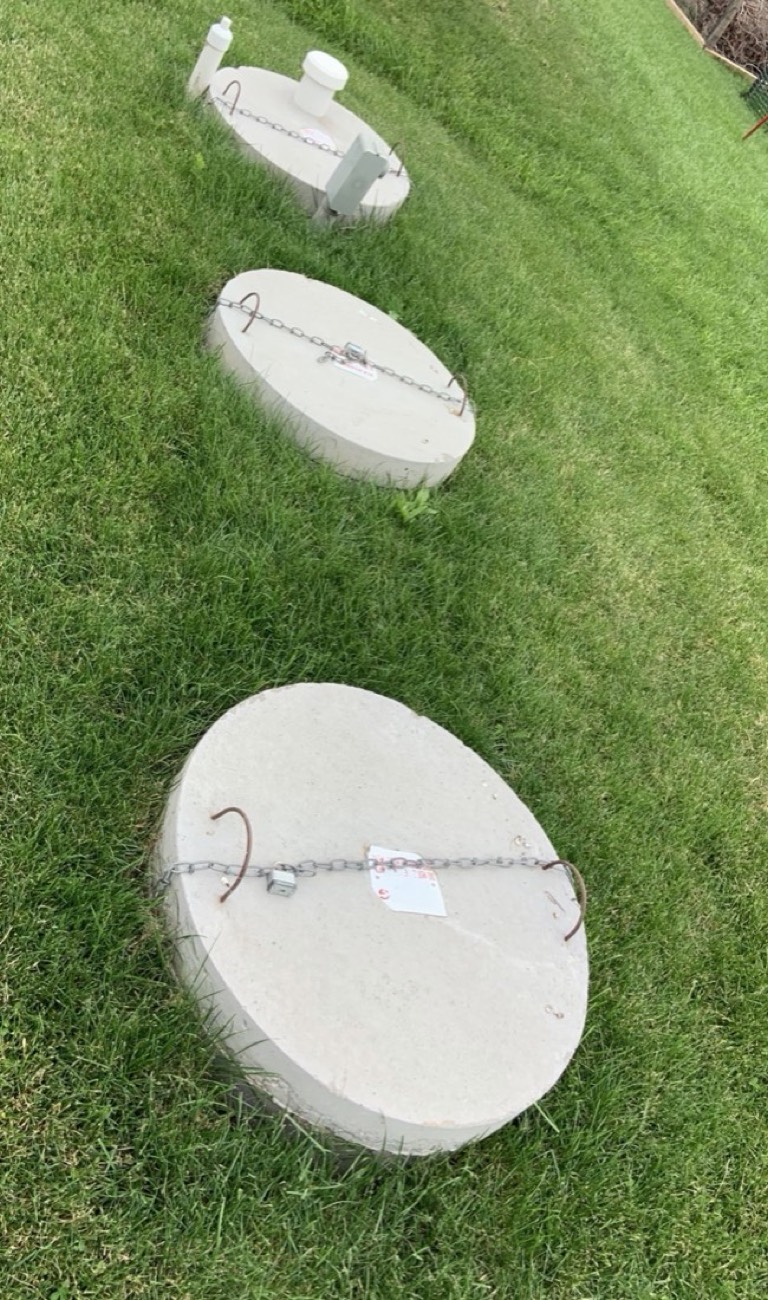
If you just bought a home with a septic system, there’s a good chance nobody told you where the tank actually is. The fastest way to find it: pull your property’s septic permit or “as-built” diagram from the county health department, which shows the exact location. If no records exist, locate where the main sewer pipe leaves your house and follow that direction into the yard — the tank is almost always 10 to 25 feet out, buried between 4 inches and 4 feet down. Below are five methods, ordered from least to most hands-on.
You need the tank’s location for routine pumping, inspections, and to avoid parking vehicles or building over it — both of which can crack the lid or compact the drain field. Start with method 1 and only move down the list if you come up empty.
1. Check your county records and the original permit
Nearly every septic system installed in the last few decades required a permit, and the county kept a copy. That file usually includes an as-built drawing showing the tank and drain field measured from a fixed point — a corner of the house, a well, or a property line.
- Call or email your county health department or environmental services office.
- Ask for the “septic permit” or “as-built” for your address.
- Many counties now have these records searchable online by parcel number.
This is the single most reliable method and costs nothing, so always try it first. Older rural homes (pre-1970s) may have no permit on file — if that’s your situation, move to method 2.
2. Follow the main sewer line out of the house
Every septic system starts with one pipe: the main sewer line leaving your home. Find where it exits and you have a direct heading to the tank.
- Go to your basement or crawl space and find the 4-inch main drain pipe where it passes through the foundation wall.
- Note the direction and the height where it exits.
- Outside, that pipe runs in a straight line and gently downhill to the tank, typically 10 to 25 feet from the wall.
- Walk that line slowly, watching for the yard clues in method 3.
Septic tanks are almost never installed around corners from the exit pipe, so a straight-line search from the foundation catches the vast majority of tanks.
3. Look for clues on the surface of your yard
Even a well-buried tank often leaves subtle signs. Walk the area between the house and the direction the sewer line runs, and look for:
| Clue | What it means |
|---|---|
| A low spot or shallow depression | Soil settled over the tank or its access lids |
| A slight mound | A tank set high, or a mound-style system |
| A patch of greener, faster-growing grass | Nutrients leaching near the tank or drain field |
| A brown or dead patch in dry weather | Shallow soil over a concrete lid dries out first |
| A visible concrete or plastic lid or riser | The access point itself, sometimes hidden under grass |
Probe gently with your foot or a stick for anything hard just under the surface. Access lids are commonly 4 to 12 inches down, though this varies. ****
4. Probe the soil with a metal rod
When surface clues run out, a soil probe (a thin steel rod with a T-handle, available at any hardware store) is the classic locating tool.
- Starting where the sewer line exits, push the rod into the soil every 2 feet along the pipe’s direction.
- A concrete, fiberglass, or plastic tank will stop the rod with a distinct hard, flat resistance — different from the give of rocks or roots.
- Once you hit the tank, probe around its edges to map the outline and find the lid.
Work carefully near the suspected tank so you don’t crack a shallow lid or puncture a pipe. If you have a plastic tank, a metal detector alone won’t help — the probe is your best tool.
5. Call the county, a pumper, or an inspector
If all else fails, the pros can find it in minutes:
- A local septic pumping company locates tanks daily and often does it as part of a pumping visit.
- Electronic locating: a technician flushes a small transmitter into the line and traces it to the tank with a receiver — the most precise option for a truly lost tank. ****
- Once found, ask them to install a riser (an access tube to the surface) so you never have to hunt for it again.
Mark it so you only do this once
The moment you find the tank, save yourself the trouble forever: measure its location from two fixed points (like two house corners), photograph it, and note the depth. Better still, install risers over the access lids so future pumping and inspections take minutes instead of an afternoon of digging.
Knowing where your tank is also makes it far easier to spot trouble early — like odors backing up into the house, which often trace straight back to a tank that’s overdue for service. Once you’ve found it, the next question is usually timing: how long a septic tank can go without pumping.